
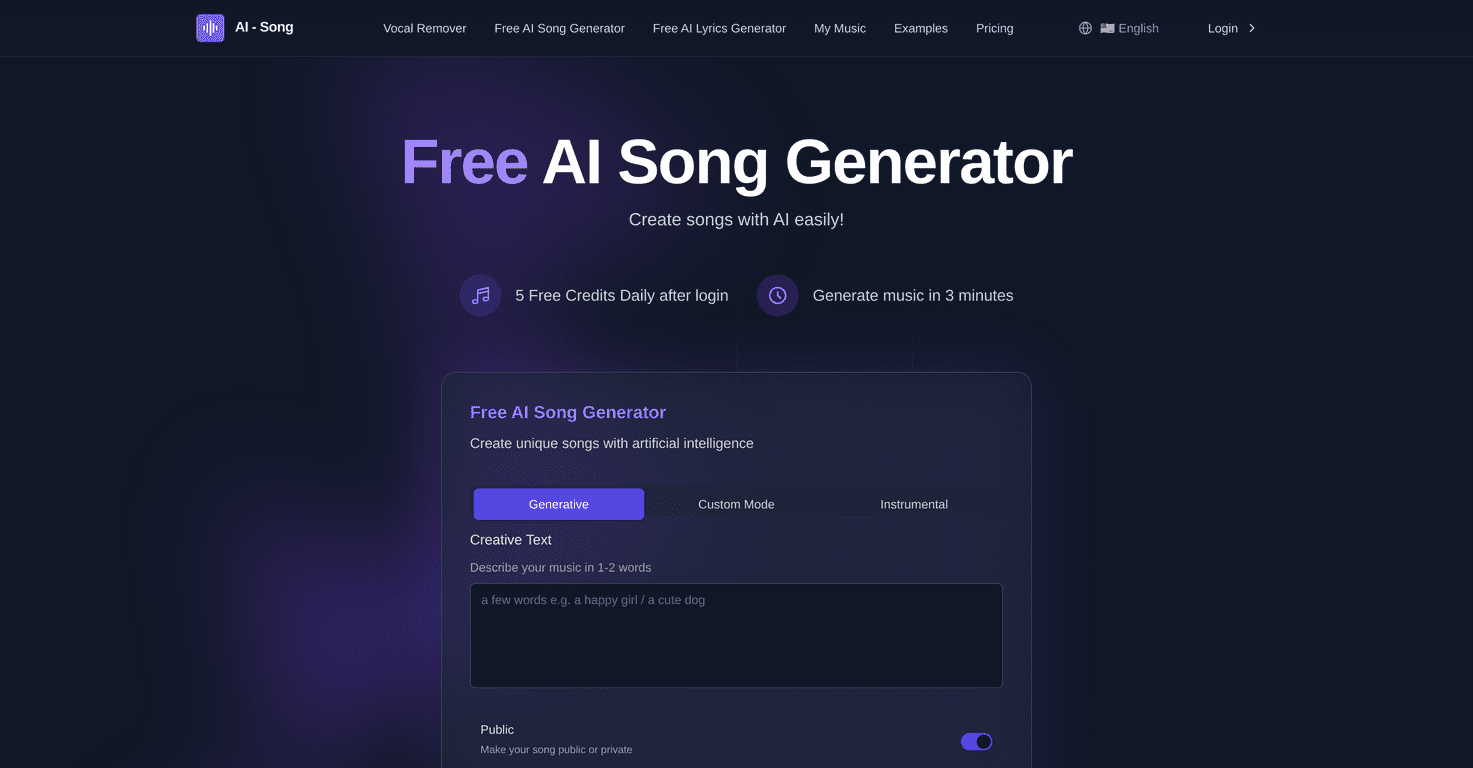
In recent years, artificial intelligence has revolutionized the way music is created and experienced. AI Song Makers have emerged as innovative tools that empower beginners and music enthusiasts to compose songs effortlessly, even without extensive musical training. These platforms leverage machine learning algorithms to generate melodies, harmonies, and rhythms based on user inputs or preset styles, making the creative process accessible and enjoyable for everyone.
For those new to AI-driven music creation, understanding how these tools function is essential. Most AI Song Makers operate by analyzing vast datasets of existing songs across various genres. By recognizing patterns in chord progressions, beats, and melodic structures, they can synthesize original compositions tailored to user preferences. Typically, users start by selecting a genre or mood-such as pop, jazz, or ambient-and then input parameters like tempo or key signature. The AI then generates a unique piece that can be further customized through editing features.
One significant advantage of using an AI song maker lies in its ability to break down barriers associated with traditional songwriting. Beginners often struggle with technical aspects such as theory knowledge or instrument proficiency; however, these platforms simplify the process by automating complex tasks while still allowing creative control. Users can experiment with different sounds and arrangements without needing expensive equipment or software expertise.
Moreover, many AI Song Makers include collaborative features that encourage interaction between users and the system’s suggestions. This dynamic fosters creativity by offering alternative ideas that might not have been considered otherwise. Music enthusiasts benefit from this synergy because it challenges their conventional approaches while providing fresh inspiration.
1. Choose a reliable platform: Popular options include Amper Music, AIVA, Soundraw.io among others. 2. Familiarize yourself with basic musical elements: Understanding terms like tempo (speed), key (scale), and instrumentation helps tailor outputs. 3. Experiment extensively: Don’t hesitate to try different settings; each variation provides new insights into how changes affect the final composition. 4. Edit generated tracks: Many applications allow you to tweak notes or add layers manually for personalization. 5. Share your creations: Uploading your work on social media or music-sharing sites boosts confidence and invites feedback from communities.
While AI cannot wholly replace human emotion embedded within traditional songwriting yet it serves as an invaluable assistant-enhancing creativity rather than limiting it.
In conclusion, embracing an AI Song Maker offers both beginners and seasoned musicians a powerful resource for exploring musical ideas quickly and intuitively. With patience and practice using these intelligent tools alongside foundational knowledge of music theory principles will unlock endless possibilities in crafting original songs tailored uniquely by you alone!